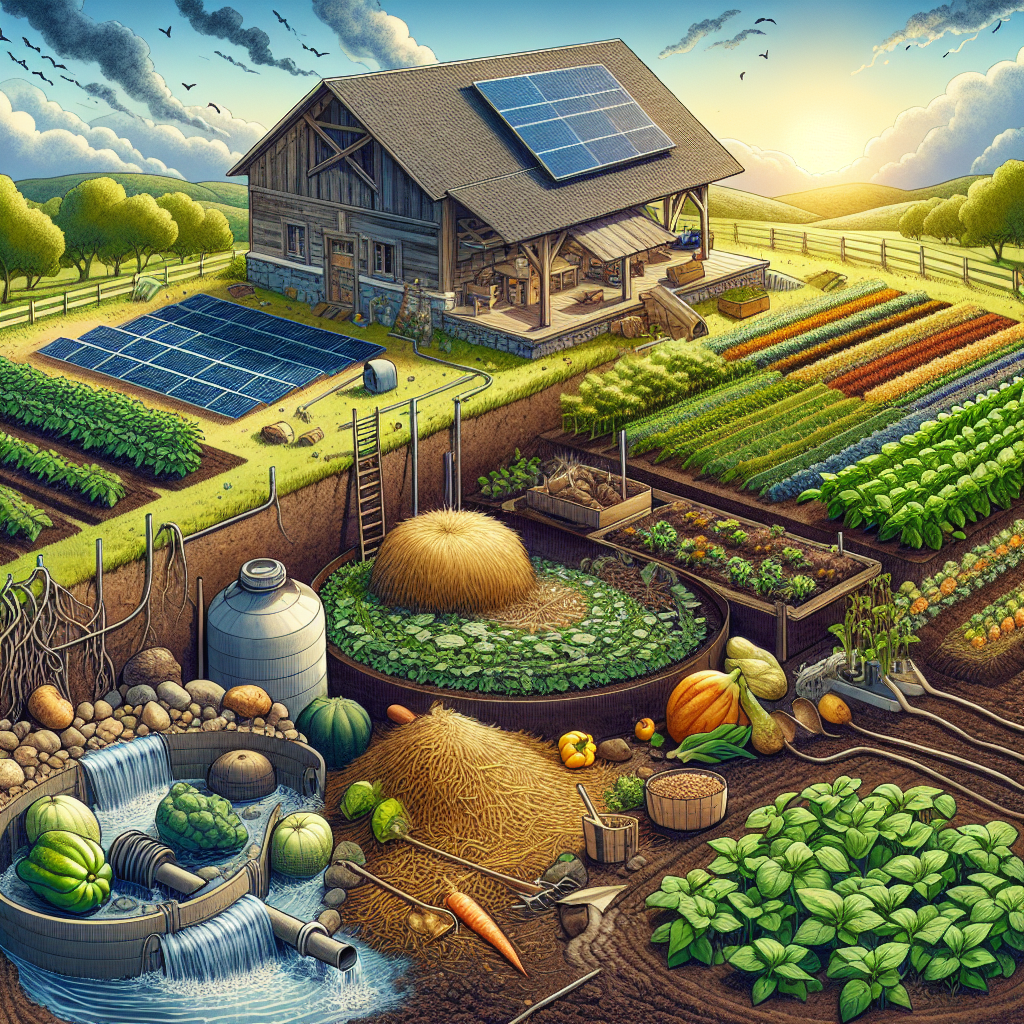
Building Resilience in the Face of Sustainable Farming and Permaculture Practices
Introduction
In recent years, sustainable farming and permaculture practices have gained significant attention as viable solutions to the myriad challenges facing modern agriculture. The increasing demand for food, coupled with the adverse impacts of climate change, necessitates the adoption of farming practices that are not only productive but also environmentally sustainable. Resilience in agriculture is the ability to adapt to changing conditions while maintaining productivity and ecological balance. This article explores the principles and practices of sustainable farming and permaculture, highlighting how they contribute to building resilience in agricultural systems.
Understanding Sustainable Farming
Sustainable farming is an agricultural approach that seeks to meet current food needs without compromising the ability of future generations to meet their own. It emphasizes the efficient use of natural resources, the preservation of biodiversity, and the maintenance of healthy ecosystems. Key principles of sustainable farming include:
– **Resource Efficiency**: Minimizing the use of non-renewable resources and maximizing the efficiency of resource use.
– **Biodiversity**: Promoting a diverse range of plant and animal species to enhance ecosystem stability and productivity.
– **Soil Health**: Maintaining and improving soil fertility through practices like crop rotation, cover cropping, and reduced tillage.
– **Water Management**: Implementing strategies for efficient water use and conservation.
– **Integrated Pest Management**: Reducing reliance on chemical pesticides by using biological pest control methods.
The Role of Permaculture
Permaculture, a term coined by Bill Mollison and David Holmgren in the 1970s, is a design philosophy that aims to create sustainable and self-sufficient agricultural systems. It draws inspiration from natural ecosystems, emphasizing the harmonious integration of land, resources, people, and the environment. Permaculture principles include:
– **Observe and Interact**: Understanding natural systems and working with them rather than against them.
– **Catch and Store Energy**: Harnessing renewable energy sources and storing them for future use.
– **Obtain a Yield**: Ensuring that the system produces a surplus to sustain itself and its caretakers.
– **Apply Self-Regulation and Accept Feedback**: Continuously monitoring and adjusting practices to improve system performance.
– **Use and Value Renewable Resources**: Prioritizing the use of resources that are abundant and sustainable.
Building Resilience through Sustainable Farming Practices
Sustainable farming practices play a crucial role in enhancing the resilience of agricultural systems. By adopting these practices, farmers can better withstand environmental shocks, adapt to changing climatic conditions, and maintain productivity. Some key strategies include:
1. **Diversification of Crops and Livestock**
– Growing a variety of crops and raising different livestock species can reduce the risk of total crop failure and provide multiple sources of income.
– Diverse agricultural systems are more resilient to pests, diseases, and extreme weather events.
2. **Agroforestry**
– Integrating trees and shrubs into agricultural landscapes can improve soil health, increase biodiversity, and provide additional income sources.
– Trees act as windbreaks, reduce soil erosion, and enhance water retention.
3. **Soil Management**
– Practices such as cover cropping, crop rotation, and reduced tillage help maintain soil fertility and structure.
– Healthy soils are better able to retain moisture and nutrients, reducing the need for chemical fertilizers.
4. **Water Conservation**
– Implementing efficient irrigation systems and rainwater harvesting can reduce water usage and increase resilience to drought.
– Practices like mulching and contour farming help retain soil moisture and prevent erosion.
5. **Integrated Pest Management**
– Utilizing natural predators, crop rotation, and polycultures can reduce pest populations and minimize the need for chemical pesticides.
– This approach helps maintain ecological balance and reduces the risk of pest outbreaks.
Permaculture as a Model for Resilience
Permaculture offers a holistic approach to building resilience in agricultural systems by mimicking the complexity and diversity of natural ecosystems. Key elements of permaculture that contribute to resilience include:
– **Designing for Diversity**: Permaculture systems incorporate a wide range of plant and animal species, creating a resilient and self-sustaining ecosystem.
– **Emphasizing Perennials**: Perennial plants, which live for multiple years, form the backbone of permaculture systems, providing continuous yields and reducing the need for replanting.
– **Creating Microclimates**: By strategically placing elements like water bodies, trees, and structures, permaculture designs create microclimates that enhance growing conditions and protect against extreme weather.
– **Building Soil Health**: Permaculture practices focus on building rich, fertile soil through composting, mulching, and organic matter addition, supporting healthy plant growth.
– **Community Involvement**: Permaculture encourages community participation and knowledge sharing, fostering a sense of stewardship and resilience in local food systems.
Challenges and Opportunities
While sustainable farming and permaculture offer numerous benefits, there are challenges to their widespread adoption. These include:
– **Knowledge and Training**: Farmers may require training and education to effectively implement sustainable practices and permaculture design.
– **Initial Investment**: Transitioning to sustainable farming systems may require upfront investment in infrastructure and resources.
– **Market Access**: Farmers may face challenges in accessing markets for sustainably produced goods.
Despite these challenges, there are significant opportunities for promoting sustainable farming and permaculture:
– **Policy Support**: Governments can incentivize sustainable practices through subsidies, grants, and technical assistance.
– **Research and Innovation**: Continued research and innovation can improve the efficiency and effectiveness of sustainable farming techniques.
– **Consumer Demand**: Increasing consumer awareness and demand for sustainably produced food can drive market growth and support farmers.
Conclusion
Building resilience in agriculture is essential for ensuring food security in the face of climate change and other global challenges. Sustainable farming and permaculture practices offer viable pathways to achieving this resilience by promoting biodiversity, enhancing soil health, and fostering community involvement. By embracing these practices, farmers can create productive, sustainable, and resilient agricultural systems that benefit both people and the planet. As we move forward, it is crucial to support and expand these practices, ensuring a sustainable future for generations to come.
