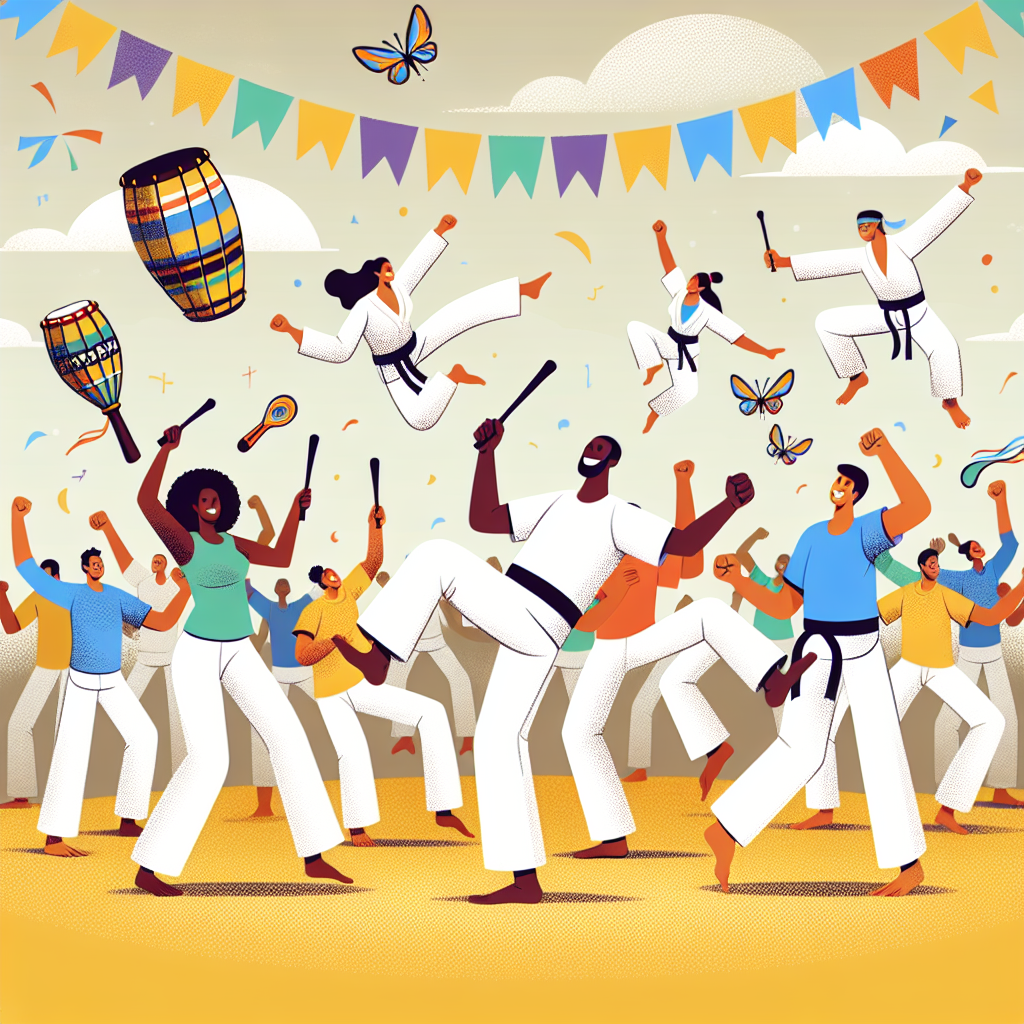
The Joy of Capoeira: Martial Arts, Dance, and Cultural Expression
Introduction
Capoeira is a captivating blend of martial arts, dance, and cultural expression that has captured the hearts of millions worldwide. Originating in Brazil, this unique art form is not only a physical discipline but also a rich cultural tapestry that embodies resilience, creativity, and community. This article explores the multifaceted nature of capoeira, delving into its history, techniques, cultural significance, and its growing global influence.
A Historical Overview
Capoeira’s roots can be traced back to the 16th century, during the transatlantic slave trade. Enslaved Africans brought to Brazil by Portuguese colonizers developed capoeira as a means of self-defense, disguised as a dance to avoid detection by their captors. Over time, it evolved into a potent symbol of resistance and identity.
– Origins in Africa: The foundational movements and rhythms of capoeira are deeply influenced by African traditions, particularly those from Angola and the Congo.
– Evolution in Brazil: As capoeira developed in the quilombos, or communities of escaped slaves, it became a tool for survival and a way to preserve cultural heritage.
– Legalization and Recognition: Once banned in Brazil due to its association with rebellion, capoeira was legalized in the 1930s and has since gained recognition as an integral part of Brazilian culture.
The Art of Movement
Capoeira is distinguished by its fluid, acrobatic movements and the seamless integration of martial arts techniques with dance. Practitioners, known as capoeiristas, engage in a dynamic game, or “jogo,” within a circle called a “roda,” accompanied by music and singing.
– Ginga: The foundational movement of capoeira, ginga is a rhythmic back-and-forth motion that keeps practitioners in constant motion, ready to attack or defend.
– Kicks and Sweeps: Capoeira includes a variety of kicks, such as the meia-lua de frente and armada, as well as sweeps like the rasteira, which are executed with precision and agility.
– Acrobatic Elements: Flips, cartwheels, and handstands, known as floreios, add a spectacular visual element to the game, showcasing the capoeirista’s strength and flexibility.
The Role of Music and Instruments
Music is an integral part of capoeira, setting the rhythm and pace of the game. It is played using traditional instruments and accompanied by songs that reflect the history and philosophy of capoeira.
– Berimbau: The berimbau is a single-string percussion instrument that dictates the tempo and style of the game. Different rhythms, or “toques,” guide the capoeiristas’ movements.
– Atabaque and Pandeiro: These percussion instruments provide additional rhythm and energy, enhancing the musical experience of the roda.
– Songs and Chants: Capoeira songs, often in Portuguese, tell stories of struggle and triumph, serving as a means of passing down knowledge and tradition.
Cultural Significance and Expression
Capoeira is more than just a physical discipline; it is a vibrant cultural expression that embodies the spirit and resilience of its practitioners. It serves as a powerful medium for storytelling, community building, and cultural preservation.
– Identity and Heritage: For many, capoeira is a way to connect with their African roots and celebrate their cultural heritage, fostering a sense of pride and belonging.
– Community and Inclusivity: Capoeira transcends social and cultural barriers, bringing people together from diverse backgrounds to share in a common passion.
– Empowerment and Resistance: Historically a symbol of resistance, capoeira continues to empower individuals and communities, promoting social justice and equality.
Global Influence and Adaptation
In recent decades, capoeira has gained international recognition, with practitioners and schools established worldwide. Its appeal lies in its dynamic blend of physicality, artistry, and cultural depth.
– International Growth: Capoeira academies have proliferated across the globe, introducing people to its unique blend of martial arts and dance.
– Fusion and Innovation: As capoeira spreads, it has adapted to different cultural contexts, leading to innovative styles and interpretations while maintaining its core principles.
– Cultural Exchange: Capoeira serves as a bridge between cultures, fostering understanding and appreciation of Brazilian heritage and the broader African diaspora.
The Benefits of Practicing Capoeira
Engaging in capoeira offers numerous physical, mental, and social benefits, making it an enriching practice for individuals of all ages and abilities.
– Physical Fitness: Capoeira improves strength, flexibility, coordination, and cardiovascular health through its varied and dynamic movements.
– Mental Well-being: The focus and discipline required in capoeira enhance concentration and mental clarity, while the expressive nature of the art form promotes emotional release and stress relief.
– Social Connections: Participating in capoeira fosters a sense of community and belonging, providing opportunities for social interaction and cultural exchange.
Conclusion
Capoeira is a remarkable art form that transcends its origins as a martial art to become a powerful symbol of cultural expression and unity. Its rich history, dynamic movements, and vibrant music create a compelling experience that resonates with people around the world. As capoeira continues to evolve and spread globally, it remains a testament to the enduring spirit of creativity, resilience, and community. Whether as a physical discipline, a cultural celebration, or a means of personal empowerment, capoeira offers joy and inspiration to all who embrace its unique blend of martial arts, dance, and cultural expression.
