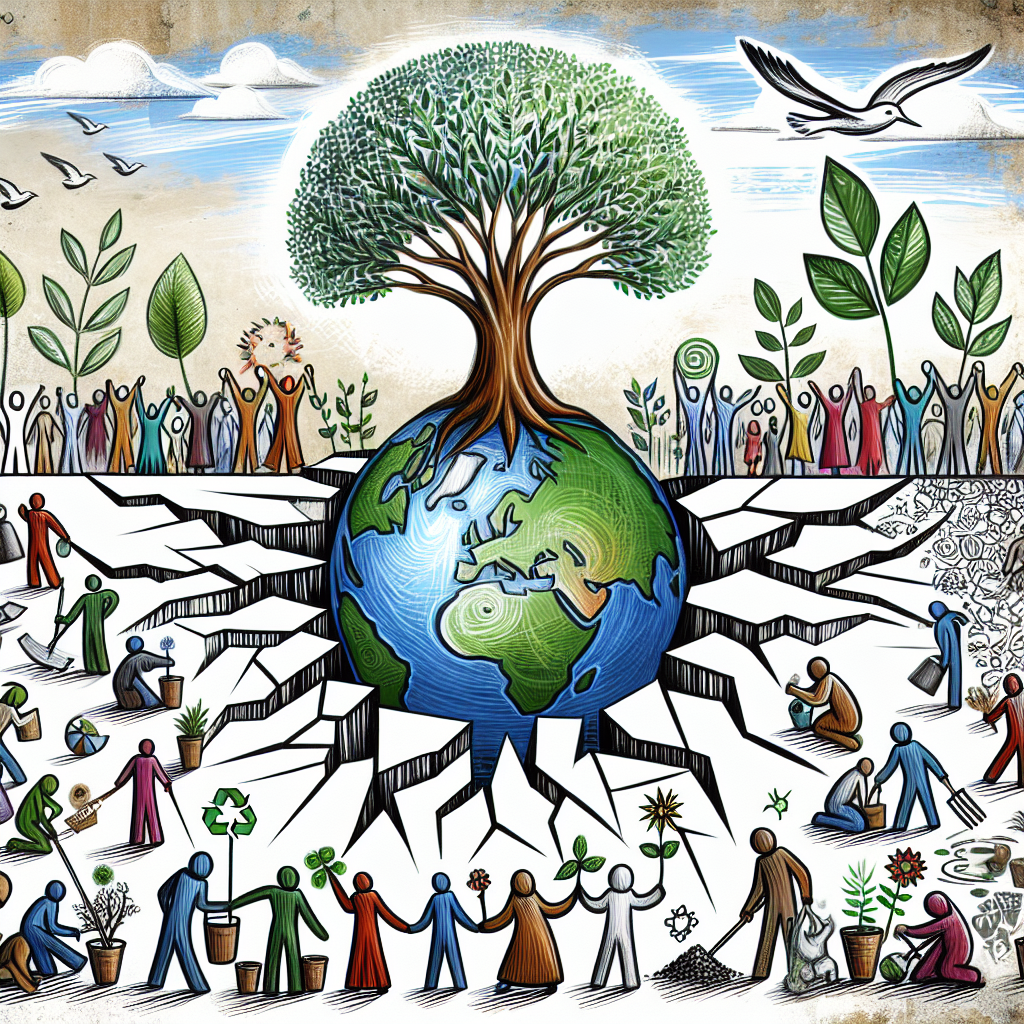
Building Resilience in the Face of Environmental Conservation and Activism
Introduction
In an era marked by unprecedented environmental challenges, the need for resilience in the face of environmental conservation and activism has never been more pressing. As ecosystems around the world face threats from climate change, pollution, deforestation, and loss of biodiversity, it is crucial for individuals, communities, and organizations to develop the capacity to adapt, recover, and thrive. This article explores the concept of resilience in the context of environmental conservation and activism, highlighting its importance, strategies for building it, and examples of successful initiatives.
Understanding Resilience in Environmental Contexts
Resilience, in its broadest sense, refers to the ability of a system, community, or individual to withstand and recover from adverse situations. In environmental contexts, resilience involves the capacity of ecosystems and human societies to absorb disturbances, adapt to changing conditions, and maintain their essential functions. This concept is particularly relevant as environmental challenges become more complex and interconnected.
The Importance of Building Resilience
1. **Adapting to Climate Change**: Climate change poses significant threats to natural and human systems. Building resilience is essential to adapt to its impacts, such as rising sea levels, extreme weather events, and shifting ecosystems.
2. **Maintaining Biodiversity**: Biodiversity is crucial for ecosystem stability and resilience. Conservation efforts that enhance resilience can help protect species and habitats from extinction.
3. **Ensuring Food Security**: Resilient agricultural practices are vital for ensuring food security in the face of climate variability and other environmental pressures.
4. **Supporting Economic Stability**: Resilient communities are better equipped to withstand economic shocks resulting from environmental disasters.
5. **Promoting Social Equity**: Environmental resilience can help address social inequalities by ensuring that vulnerable populations have the resources needed to adapt and thrive.
Strategies for Building Resilience
1. **Enhancing Ecosystem Services**: Protecting and restoring ecosystems can enhance their capacity to provide essential services such as clean water, air purification, and carbon sequestration.
2. **Implementing Sustainable Practices**: Adopting sustainable practices in agriculture, forestry, and fisheries can reduce environmental degradation and enhance resilience.
3. **Investing in Green Infrastructure**: Building infrastructure that mimics natural systems, such as green roofs and permeable pavements, can help manage stormwater and reduce urban heat.
4. **Fostering Community Engagement**: Engaging communities in conservation and resilience-building efforts can enhance local knowledge and ensure that solutions are context-specific and culturally appropriate.
5. **Promoting Education and Awareness**: Educating the public about environmental issues and resilience strategies can empower individuals to take action and support conservation efforts.
6. **Strengthening Policy Frameworks**: Effective policies and regulations are essential for guiding resilience-building efforts and ensuring that resources are allocated efficiently.
Case Studies of Resilience in Action
1. **The Great Green Wall Initiative**: This ambitious project aims to combat desertification in the Sahel region of Africa by planting a wall of trees across the continent. By restoring degraded land, the initiative seeks to improve food security, create jobs, and enhance resilience to climate change.
2. **New York City’s Climate Resilience Plan**: In response to Hurricane Sandy, New York City developed a comprehensive climate resilience plan that includes investments in flood protection, resilient infrastructure, and community preparedness. This plan aims to protect the city from future climate impacts.
3. **Community-Based Conservation in the Amazon**: Indigenous communities in the Amazon rainforest are leading efforts to protect their lands from deforestation and extractive industries. By combining traditional knowledge with modern conservation techniques, these communities are enhancing the resilience of their ecosystems and cultures.
4. **Agroecology in Cuba**: In response to food shortages and economic challenges, Cuba has embraced agroecology, a sustainable farming approach that enhances soil health and biodiversity. This shift has increased the resilience of the country’s food system.
Challenges to Building Resilience
1. **Resource Constraints**: Limited financial and human resources can hinder resilience-building efforts, particularly in low-income regions.
2. **Political and Institutional Barriers**: Inadequate governance structures and lack of political will can impede the implementation of effective resilience strategies.
3. **Conflicting Interests**: Balancing economic development with environmental conservation can be challenging, especially when short-term gains are prioritized over long-term resilience.
4. **Information Gaps**: Lack of data and research on environmental systems can limit the ability to develop targeted resilience strategies.
5. **Cultural and Social Factors**: Cultural beliefs and social dynamics can influence perceptions of risk and willingness to adopt resilience measures.
The Role of Activism in Building Resilience
Environmental activism plays a crucial role in raising awareness, advocating for policy change, and driving grassroots efforts to build resilience. Activists can:
1. **Mobilize Public Support**: By raising awareness about environmental issues, activists can build public support for resilience-building initiatives.
2. **Advocate for Policy Change**: Activists can influence policymakers to prioritize resilience in environmental and development agendas.
3. **Foster Collaboration**: Activism can bring together diverse stakeholders, including governments, businesses, and communities, to work towards common resilience goals.
4. **Promote Innovation**: Activists often drive innovation by challenging conventional approaches and advocating for creative solutions to environmental challenges.
Conclusion
Building resilience in the face of environmental conservation and activism is a multifaceted and dynamic process. It requires the collaboration of individuals, communities, organizations, and governments to develop and implement strategies that enhance the capacity of ecosystems and societies to adapt, recover, and thrive. By understanding the importance of resilience, adopting effective strategies, and overcoming challenges, we can create a more sustainable and equitable future for all. As environmental challenges continue to evolve, resilience will remain a critical component of our collective response, ensuring that we can navigate the complexities of the natural world with strength and adaptability.
