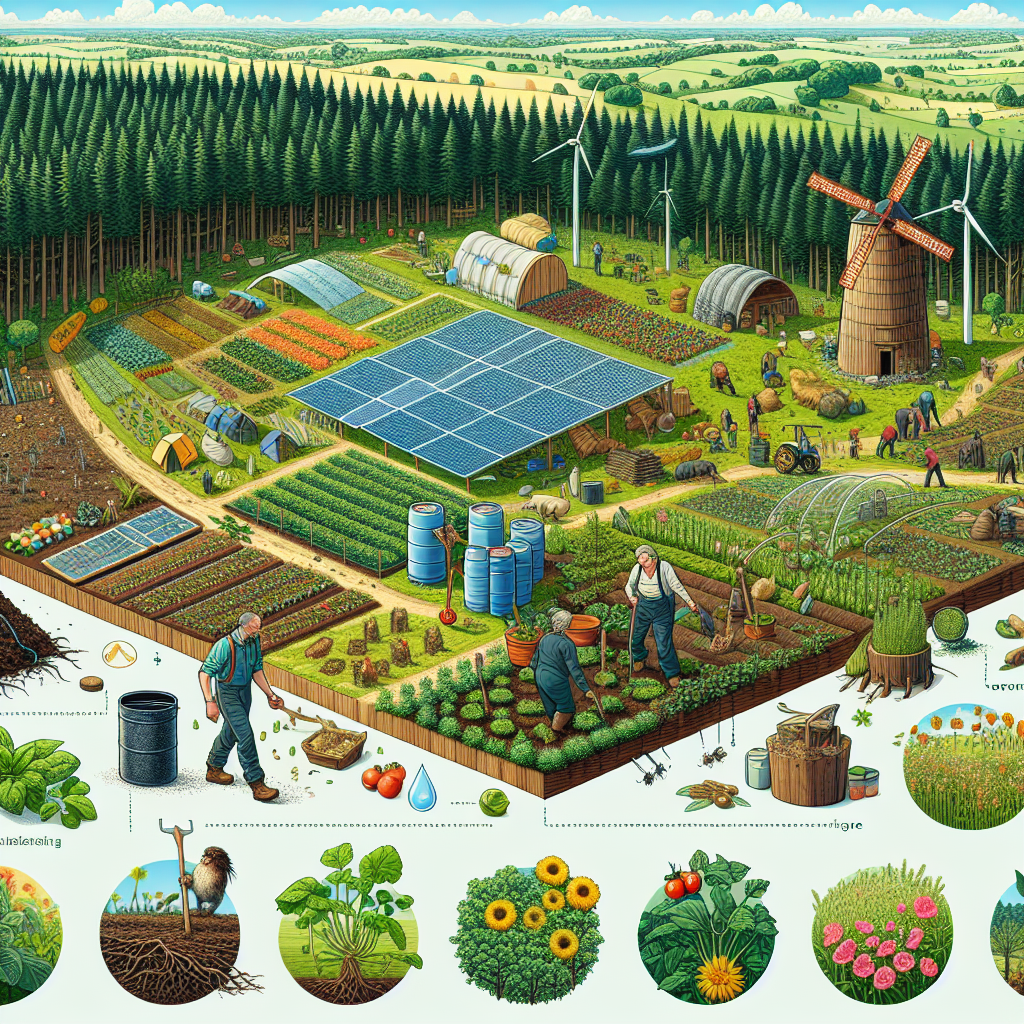
Building Resilience in the Face of Sustainable Farming and Permaculture Practices
Introduction
In recent years, the global agricultural landscape has been undergoing a profound transformation. Faced with the challenges of climate change, resource depletion, and environmental degradation, the need for sustainable farming practices has never been more urgent. Among the various approaches to sustainable agriculture, permaculture stands out as a holistic and resilient system that integrates land, resources, people, and the environment. This article explores the principles of sustainable farming and permaculture, their benefits, and how they contribute to building resilience in agricultural systems.
Understanding Sustainable Farming
Sustainable farming is an agricultural approach that seeks to meet the needs of the present without compromising the ability of future generations to meet their own needs. It encompasses a range of practices aimed at conserving resources, reducing environmental impact, and enhancing biodiversity. Key aspects of sustainable farming include:
– Soil Health: Maintaining and improving soil fertility through practices like crop rotation, cover cropping, and reduced tillage.
– Water Management: Implementing efficient irrigation systems and rainwater harvesting to minimize water wastage.
– Pest Management: Using integrated pest management techniques to control pests while minimizing harm to the environment.
– Energy Efficiency: Reducing reliance on fossil fuels through the use of renewable energy sources and energy-efficient technologies.
The Principles of Permaculture
Permaculture, a term coined by Bill Mollison and David Holmgren in the 1970s, is a design philosophy that mimics natural ecosystems to create sustainable and self-sufficient agricultural systems. It is underpinned by three core ethics: care for the earth, care for people, and fair share. The principles of permaculture guide practitioners in designing resilient systems:
– Observe and Interact: Understanding the natural environment and its patterns to inform design decisions.
– Catch and Store Energy: Harnessing renewable resources such as sunlight and rainwater to reduce dependency on external inputs.
– Obtain a Yield: Ensuring that the system produces a surplus to meet the needs of its inhabitants.
– Apply Self-Regulation and Accept Feedback: Continuously monitoring and adjusting practices to improve system efficiency.
– Use and Value Renewable Resources: Prioritizing the use of natural resources that can be replenished.
– Produce No Waste: Designing systems that recycle and reuse resources, minimizing waste production.
The Benefits of Sustainable Farming and Permaculture
The adoption of sustainable farming and permaculture practices offers numerous benefits that contribute to building resilience in agricultural systems:
Environmental Benefits
– Biodiversity Enhancement: Sustainable practices promote diverse ecosystems that support a wide range of plant and animal species.
– Soil Conservation: Techniques such as cover cropping and reduced tillage prevent soil erosion and maintain soil structure.
– Water Conservation: Efficient water management practices reduce water usage and protect water quality.
– Carbon Sequestration: Agroforestry and other carbon-capturing practices help mitigate climate change by storing carbon in vegetation and soil.
Economic Benefits
– Cost Savings: Reducing reliance on synthetic inputs and fossil fuels lowers production costs.
– Market Opportunities: Growing consumer demand for sustainably produced food creates new market opportunities for farmers.
– Risk Reduction: Diversified farming systems are less vulnerable to market fluctuations and environmental shocks.
Social Benefits
– Community Engagement: Sustainable farming practices often involve community participation, strengthening social ties.
– Food Security: Resilient agricultural systems ensure a stable and reliable food supply.
– Knowledge Sharing: Permaculture encourages the exchange of knowledge and skills among practitioners, fostering innovation.
Implementing Sustainable Practices
Transitioning to sustainable farming and permaculture practices requires careful planning and a willingness to adapt. Here are some steps to consider:
Assessing the Current System
– Conduct a thorough analysis of existing farming practices, identifying areas for improvement.
– Evaluate resource availability, including soil quality, water resources, and biodiversity.
Designing a Sustainable System
– Develop a comprehensive plan that incorporates permaculture principles and sustainable practices.
– Design the layout of the farm to optimize resource use and enhance ecological interactions.
Implementing Changes
– Begin with small, manageable changes and gradually scale up as confidence and experience grow.
– Monitor progress and make adjustments based on feedback and observations.
Educating and Engaging Stakeholders
– Involve local communities and stakeholders in the planning and implementation process.
– Provide education and training to ensure a smooth transition to sustainable practices.
Challenges and Solutions
While the benefits of sustainable farming and permaculture are clear, there are challenges that must be addressed to ensure successful implementation:
Financial Constraints
– Challenge: Initial investment costs for transitioning to sustainable practices can be high.
– Solution: Seek funding opportunities from government programs, non-profit organizations, and private investors.
Knowledge Gaps
– Challenge: A lack of understanding and expertise in sustainable farming practices may hinder adoption.
– Solution: Provide education and training programs to equip farmers with the necessary skills and knowledge.
Resistance to Change
– Challenge: Traditional farming practices may be deeply ingrained, leading to resistance to change.
– Solution: Demonstrate the benefits of sustainable practices through pilot projects and success stories.
Policy and Regulatory Barriers
– Challenge: Existing policies and regulations may not support sustainable farming initiatives.
– Solution: Advocate for policy changes that promote and incentivize sustainable practices.
Case Studies: Successful Examples of Sustainable Farming and Permaculture
Several successful examples of sustainable farming and permaculture practices illustrate their potential to build resilience:
The Loess Plateau, China
– Once severely degraded, the Loess Plateau has been transformed through large-scale soil and water conservation efforts.
– Terracing, reforestation, and sustainable land management practices have restored the landscape, improving food security and livelihoods.
Zaytuna Farm, Australia
– Zaytuna Farm is a permaculture demonstration site that showcases sustainable farming practices.
– The farm integrates diverse elements such as food forests, water management systems, and animal husbandry to create a resilient ecosystem.
The Satoyama Initiative, Japan
– The Satoyama Initiative promotes the harmonious coexistence of humans and nature through sustainable land use.
– Traditional agricultural practices are combined with modern techniques to enhance biodiversity and ecosystem services.
Conclusion
Building resilience in the face of sustainable farming and permaculture practices is not only an environmental imperative but also an economic and social opportunity. By adopting these practices, farmers can create systems that are not only productive and profitable but also sustainable and resilient. As the global community continues to grapple with the challenges of climate change and resource scarcity, sustainable farming and permaculture offer a path forward that benefits both people and the planet. Through careful planning, education, and collaboration, we can build a resilient agricultural future that sustains generations to come.
