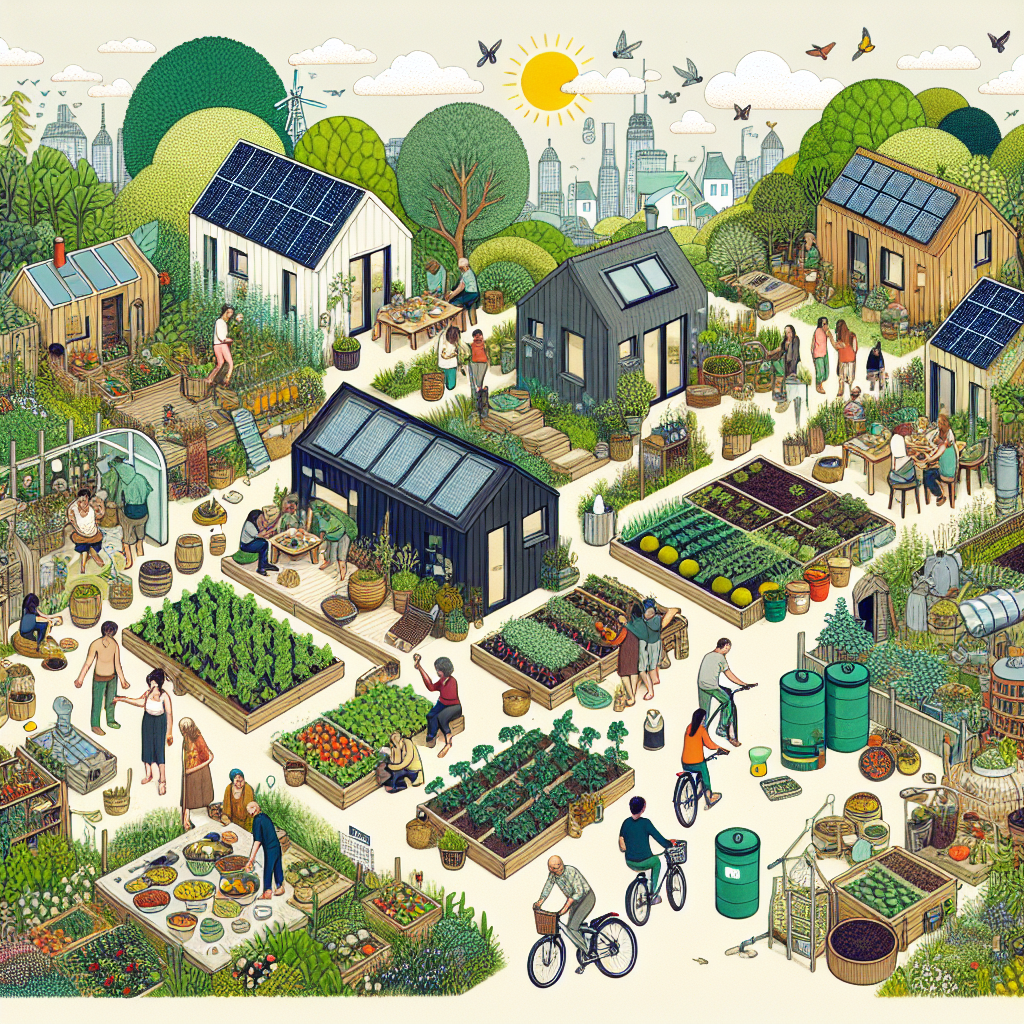
Achieving Happiness Through Sustainable Living in Co-Housing and Communes
Introduction
In recent years, the quest for sustainable living has gained significant momentum as individuals and communities seek to reduce their environmental footprint and foster a more harmonious relationship with the planet. Among the various approaches to sustainable living, co-housing and communes have emerged as popular models. These living arrangements not only emphasize ecological responsibility but also promote a sense of community and shared values. This article explores how sustainable living in co-housing and communes can contribute to personal happiness and well-being.
Understanding Co-Housing and Communes
Co-Housing: A Modern Approach to Community Living
Co-housing is a form of intentional community where individuals or families reside in private homes but share common spaces and resources. This model originated in Denmark in the 1960s and has since spread globally. Co-housing communities are designed to foster interaction and collaboration among residents while maintaining privacy and independence. Key features of co-housing include:
– Shared facilities such as kitchens, laundry rooms, and recreational areas.
– Collaborative decision-making processes.
– A focus on sustainability through energy-efficient buildings and shared resources.
– A strong sense of community and mutual support.
Communes: A Traditional Model with Modern Relevance
Communes, also known as intentional communities or eco-villages, are collective living arrangements where members share resources, responsibilities, and often a common ideology or lifestyle. While communes have a long history, dating back to utopian experiments in the 19th century, they remain relevant today as people seek alternative ways of living. Characteristics of communes include:
– Shared ownership of land and resources.
– Collective decision-making and governance.
– Emphasis on sustainability and self-sufficiency.
– Strong social bonds and communal activities.
The Intersection of Sustainability and Happiness
The Environmental Benefits of Sustainable Living
Sustainable living in co-housing and communes offers numerous environmental advantages. By sharing resources and facilities, these communities reduce waste and energy consumption. For instance, communal gardens and farms promote local food production, decreasing reliance on industrial agriculture and reducing carbon footprints. Additionally, energy-efficient buildings and renewable energy sources further minimize environmental impact. These practices align with the principles of sustainability, contributing to a healthier planet.
The Psychological Benefits of Community Living
Living in a community-oriented environment has significant psychological benefits. Co-housing and communes foster social connections, reducing feelings of isolation and loneliness. Regular interactions with neighbors and shared activities create a sense of belonging, enhancing emotional well-being. Furthermore, the collaborative nature of these communities encourages personal growth and learning, as individuals are exposed to diverse perspectives and experiences.
The Role of Shared Values and Purpose
One of the key elements that contribute to happiness in co-housing and communes is the alignment of shared values and purpose. Residents often share a commitment to sustainability, social justice, and community engagement. This shared vision creates a sense of unity and purpose, providing individuals with a greater sense of meaning in their lives. When people feel connected to a larger goal, they experience increased satisfaction and fulfillment.
Building and Maintaining a Successful Co-Housing or Commune Community
Essential Elements for Success
Creating a successful co-housing or commune community requires careful planning and commitment. Key elements include:
– Clear communication and conflict resolution strategies.
– A well-defined decision-making process.
– A commitment to sustainability and shared values.
– Regular community meetings and activities to strengthen bonds.
Challenges and Solutions
While co-housing and communes offer numerous benefits, they also present challenges. Common issues include:
– Decision-making conflicts: Establishing clear governance structures and consensus-building processes can mitigate conflicts.
– Financial sustainability: Developing diverse income streams and shared economic models can enhance financial stability.
– Balancing privacy and community: Designing spaces that offer both communal and private areas ensures residents can enjoy solitude when needed.
Case Studies: Successful Co-Housing and Commune Models
EcoVillage at Ithaca, New York
EcoVillage at Ithaca is a renowned example of a successful co-housing community. Established in the early 1990s, this community emphasizes ecological sustainability and social equity. Key features include:
– Energy-efficient homes and renewable energy sources.
– A strong commitment to organic farming and local food production.
– A vibrant social community with regular events and activities.
Twin Oaks Community, Virginia
Twin Oaks Community is one of the oldest and most well-known communes in the United States. Founded in 1967, it operates on principles of cooperation, equality, and sustainability. Highlights of Twin Oaks include:
– Shared ownership of land and resources.
– A diverse range of income-generating activities, including a tofu business and hammock production.
– A strong focus on environmental conservation and permaculture.
The Future of Co-Housing and Communes
Growing Interest and Potential for Expansion
As global awareness of environmental issues and social isolation increases, interest in co-housing and communes is likely to grow. These models offer viable solutions for sustainable living and community building. As more people seek alternatives to traditional housing, co-housing and communes have the potential to expand and evolve, incorporating innovative technologies and practices.
The Role of Policy and Support
Government policies and support can play a crucial role in promoting the development of co-housing and communes. By providing incentives for sustainable building practices and facilitating access to land and resources, policymakers can encourage the growth of these communities. Additionally, educational programs and awareness campaigns can help dispel misconceptions and highlight the benefits of communal living.
Conclusion
Achieving happiness through sustainable living in co-housing and communes is not only possible but increasingly relevant in today’s world. These models offer a holistic approach to well-being, combining environmental responsibility, social connection, and shared purpose. By embracing the principles of sustainability and community, individuals can find greater fulfillment and contribute to a more harmonious and equitable society. As interest in alternative living arrangements continues to rise, co-housing and communes represent a promising path toward a happier and more sustainable future.
