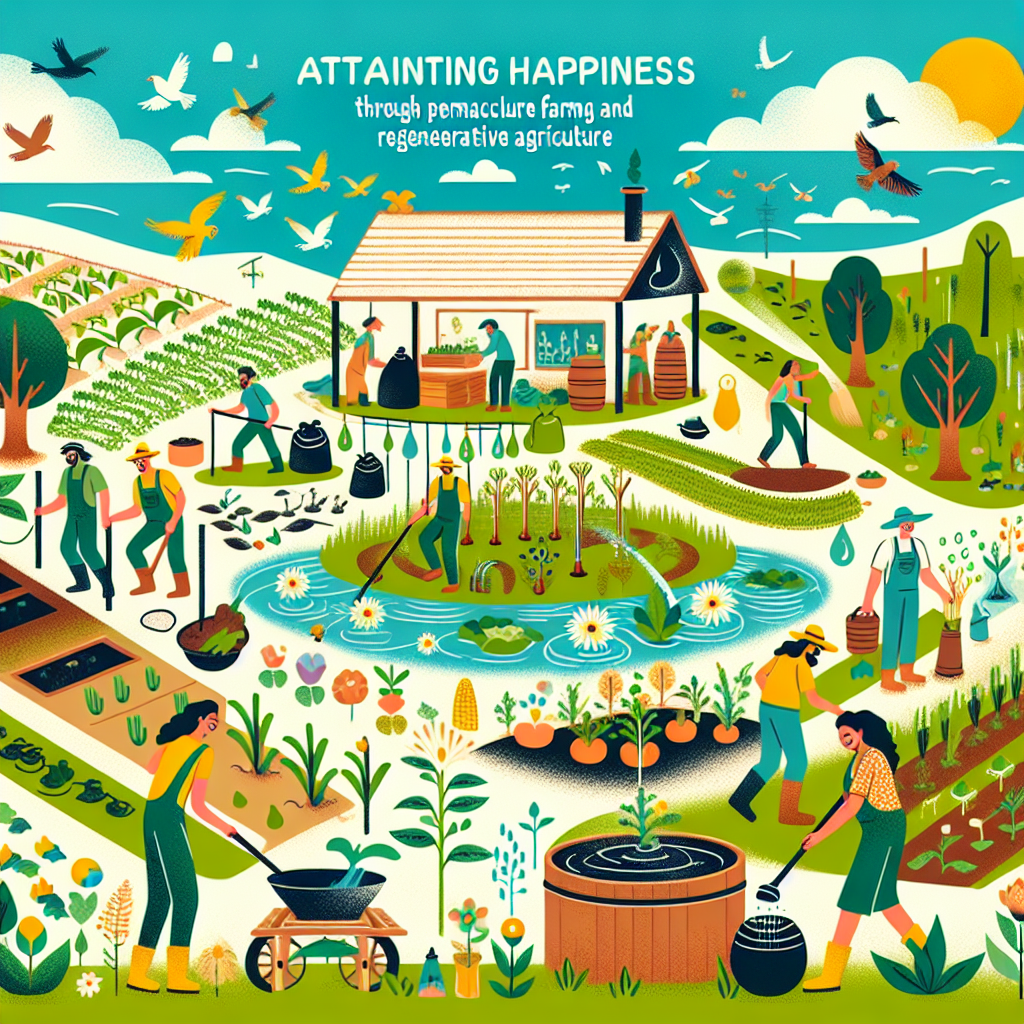
Achieving Happiness Through Permaculture Farming and Regenerative Agriculture
Introduction
In recent years, the world has witnessed a growing interest in sustainable living practices that not only protect the environment but also enhance the quality of life for individuals and communities. Among these practices, permaculture farming and regenerative agriculture have emerged as transformative approaches that promise not only ecological benefits but also personal fulfillment and happiness. This article explores how these agricultural practices contribute to happiness by fostering a deeper connection with nature, promoting community well-being, and ensuring sustainable food production.
Understanding Permaculture Farming
Permaculture is a design philosophy that seeks to create sustainable and self-sufficient agricultural systems by mimicking natural ecosystems. The term permaculture, coined by Bill Mollison and David Holmgren in the 1970s, combines the words permanent and agriculture. It emphasizes working with nature rather than against it, promoting biodiversity, and using resources efficiently.
Key Principles of Permaculture
– **Observation and Interaction**: Understanding the land and its natural processes is crucial. By observing and interacting with the environment, farmers can design systems that are in harmony with nature.
– **Catch and Store Energy**: Efficient use of energy sources, such as sunlight and rainwater, ensures that resources are not wasted.
– **Obtain a Yield**: Permaculture systems are designed to produce food and other resources sustainably, ensuring that the needs of the community are met.
– **Apply Self-Regulation and Accept Feedback**: Continuous learning and adaptation are vital for the long-term success of permaculture systems.
– **Use and Value Renewable Resources**: Emphasizing the use of renewable resources reduces dependency on non-renewable inputs.
Benefits of Permaculture for Happiness
Permaculture farming offers numerous benefits that contribute to happiness, including:
– **Connection with Nature**: By working closely with natural systems, individuals develop a profound appreciation for the environment, leading to increased mental well-being.
– **Sense of Accomplishment**: Growing one’s own food and creating a self-sustaining ecosystem provides a sense of achievement and purpose.
– **Community Engagement**: Permaculture often involves community participation, fostering a sense of belonging and shared purpose.
– **Reduced Stress**: The tranquil and harmonious environment of a permaculture farm can significantly reduce stress and anxiety.
Exploring Regenerative Agriculture
Regenerative agriculture is an approach that seeks to restore and enhance the health of soil, ecosystems, and communities. Unlike conventional agriculture, which often depletes natural resources, regenerative agriculture focuses on rebuilding soil organic matter and biodiversity, leading to healthier and more resilient ecosystems.
Core Practices of Regenerative Agriculture
– **Cover Cropping**: Planting cover crops helps protect and enrich the soil, preventing erosion and promoting biodiversity.
– **No-Till Farming**: Minimizing soil disturbance preserves soil structure and encourages the growth of beneficial microorganisms.
– **Diverse Crop Rotations**: Rotating crops improves soil health and reduces pest and disease pressure.
– **Agroforestry**: Integrating trees and shrubs into agricultural landscapes enhances biodiversity and provides additional resources.
– **Holistic Grazing Management**: Managed grazing practices improve pasture health and increase carbon sequestration.
How Regenerative Agriculture Promotes Happiness
Regenerative agriculture contributes to happiness in several ways:
– **Healthier Food**: By enhancing soil health, regenerative agriculture produces nutrient-rich food, leading to better health and well-being.
– **Environmental Stewardship**: Engaging in practices that heal the land fosters a sense of pride and responsibility.
– **Economic Resilience**: Sustainable farming practices often lead to more stable and resilient agricultural businesses, reducing financial stress.
– **Empowerment**: Farmers and communities gain a sense of empowerment by taking control of their food systems and contributing to global sustainability.
The Intersection of Permaculture and Regenerative Agriculture
While permaculture and regenerative agriculture have distinct philosophies, they share common goals and can complement each other effectively. Both approaches prioritize sustainability, ecological health, and community well-being. By integrating permaculture design principles with regenerative practices, farmers can create systems that are not only productive but also regenerative and resilient.
Case Studies: Real-World Examples
1. **Zaytuna Farm, Australia**: Founded by Geoff Lawton, Zaytuna Farm is a leading example of permaculture design. The farm integrates a variety of practices, including food forests, water harvesting, and natural building techniques. Visitors and students often report a profound sense of inspiration and happiness after experiencing the farm’s harmonious systems.
2. **Polyface Farm, USA**: Managed by Joel Salatin, Polyface Farm is a model of regenerative agriculture. The farm employs holistic management and rotational grazing to enhance soil fertility and biodiversity. Salatin’s innovative practices have inspired countless farmers to adopt regenerative methods, contributing to a broader movement towards sustainable agriculture.
3. **La Junquera, Spain**: This regenerative farm focuses on restoring degraded landscapes through agroforestry, holistic grazing, and community engagement. By transforming barren land into thriving ecosystems, La Junquera demonstrates the potential of regenerative agriculture to bring joy and fulfillment to both farmers and the surrounding community.
Practical Steps for Adopting Permaculture and Regenerative Practices
For individuals and communities interested in pursuing permaculture and regenerative agriculture, the following steps can serve as a guide:
1. **Education and Training**: Attend workshops, courses, and seminars to gain a solid understanding of permaculture and regenerative principles.
2. **Start Small**: Begin with a small garden or plot to experiment with different techniques and observe the results.
3. **Community Collaboration**: Engage with local communities and organizations to share knowledge and resources.
4. **Adaptation and Innovation**: Continuously adapt practices to suit local conditions and explore innovative solutions to challenges.
5. **Document and Share**: Keep records of successes and failures to learn from experiences and share insights with others.
Conclusion
Permaculture farming and regenerative agriculture offer more than just sustainable food production; they provide pathways to personal happiness and community well-being. By fostering a deep connection with nature, promoting environmental stewardship, and encouraging community collaboration, these practices empower individuals to lead fulfilling and purposeful lives. As more people embrace these transformative approaches, the promise of a happier and more sustainable future becomes increasingly attainable. Whether through a backyard garden or a large-scale farm, the journey towards happiness through permaculture and regenerative agriculture is one that holds immense potential for positive change.
