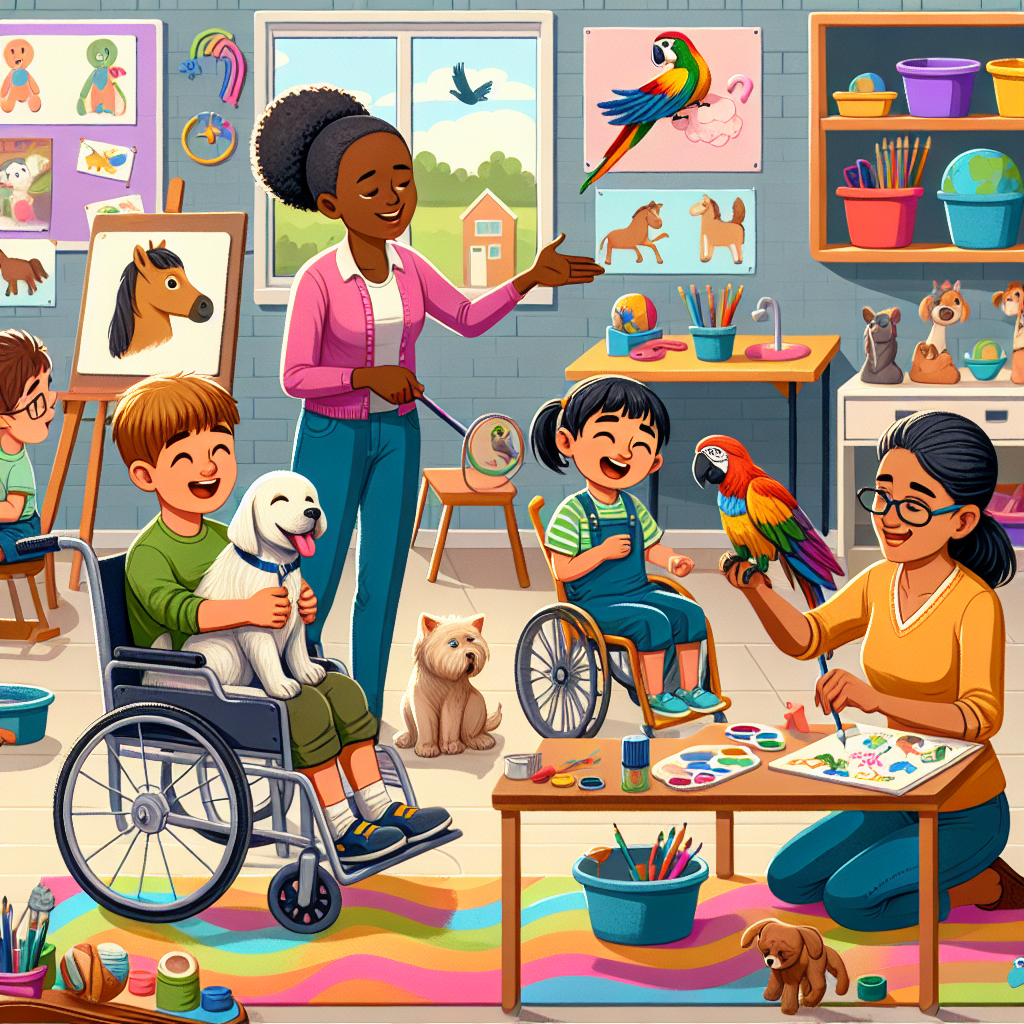
**The Role of Animal-Assisted Learning in Special Education and Rehabilitation**
In recent years, animal-assisted learning has emerged as a promising approach within the fields of special education and rehabilitation. This innovative method leverages the innate bond between humans and animals to facilitate learning, emotional growth, and physical rehabilitation. As educators and therapists continue to explore and refine these techniques, the benefits of animal-assisted learning are becoming increasingly evident. This article delves into the multifaceted role of animal-assisted learning, examining its impact on special education and rehabilitation, and highlighting the potential it holds for enhancing the quality of life for individuals with diverse needs.
**Understanding Animal-Assisted Learning**
Animal-assisted learning encompasses a range of educational and therapeutic activities that incorporate animals as a fundamental component of the learning process. This approach is grounded in the belief that interactions with animals can foster a supportive environment conducive to learning and personal development. The animals involved in these programs, typically trained therapy animals such as dogs, horses, and even dolphins, serve as catalysts for engagement and motivation.
**The Science Behind Animal-Assisted Learning**
The effectiveness of animal-assisted learning is supported by a growing body of research that highlights the psychological and physiological benefits of human-animal interactions. Studies have shown that interacting with animals can lead to reduced stress levels, decreased anxiety, and improved mood. These effects are attributed to the release of oxytocin, a hormone associated with bonding and social connection, which occurs during positive interactions with animals.
Furthermore, the presence of animals can create a non-judgmental and accepting environment, allowing individuals to feel more comfortable and open to learning. This is particularly beneficial for individuals with special needs, who may struggle with traditional educational settings.
**Animal-Assisted Learning in Special Education**
In special education, animal-assisted learning offers a unique and effective approach to addressing the diverse needs of students. The incorporation of animals into the learning process can help to:
– **Enhance Social Skills**: Interacting with animals can provide students with opportunities to practice social skills in a safe and supportive environment. Animals can act as social facilitators, encouraging communication and collaboration among peers.
– **Improve Emotional Regulation**: The calming presence of animals can help students manage their emotions more effectively. For children with autism spectrum disorder, for example, interactions with therapy animals have been shown to reduce instances of meltdowns and improve emotional regulation.
– **Boost Motivation and Engagement**: Animals can serve as a source of motivation, encouraging students to participate actively in learning activities. The novelty and excitement of working with animals can increase engagement and attention span.
– **Support Physical Development**: Activities involving animals, such as horseback riding or dog agility training, can promote physical development by improving coordination, balance, and fine motor skills.
**Case Studies in Special Education**
Numerous case studies illustrate the transformative impact of animal-assisted learning in special education settings. For instance, programs that incorporate horses, known as equine-assisted learning, have been particularly effective for children with autism. These programs often focus on developing communication skills, as the non-verbal cues required to interact with horses can enhance a child’s ability to understand and use non-verbal communication in human interactions.
Similarly, canine-assisted learning programs have been successful in improving literacy skills among students with learning disabilities. Reading to a therapy dog can provide a non-threatening and supportive environment for students to practice reading aloud, helping to build confidence and fluency.
**Animal-Assisted Learning in Rehabilitation**
Beyond special education, animal-assisted learning plays a significant role in rehabilitation, offering therapeutic benefits for individuals recovering from physical injuries, mental health challenges, and neurological conditions. The presence of animals in rehabilitation settings can contribute to:
– **Physical Rehabilitation**: Activities involving animals, such as walking a therapy dog or engaging in horse-assisted therapy, can aid in physical rehabilitation by encouraging movement and exercise. These activities can improve strength, coordination, and overall physical fitness.
– **Mental Health Support**: Interacting with animals has been shown to reduce symptoms of depression and anxiety, making it a valuable component of mental health rehabilitation. The companionship and unconditional support provided by animals can help individuals feel more connected and less isolated.
– **Cognitive Rehabilitation**: Animal-assisted learning can also support cognitive rehabilitation by engaging individuals in activities that stimulate memory, attention, and problem-solving skills. For example, caring for a therapy animal can involve tasks that require planning and organization, which can be beneficial for individuals recovering from brain injuries.
**Case Studies in Rehabilitation**
Animal-assisted learning has demonstrated significant benefits in various rehabilitation contexts. For example, equine-assisted therapy has been used to support veterans with post-traumatic stress disorder, providing a safe and calming environment for emotional healing. The rhythmic motion of riding a horse can also have a soothing effect, helping to regulate the nervous system.
In physical rehabilitation, therapy dogs have been employed to motivate patients to engage in exercises that they might otherwise find challenging or tedious. The presence of a therapy dog can make rehabilitation sessions more enjoyable and less daunting, leading to improved outcomes.
**Challenges and Considerations**
While animal-assisted learning offers numerous benefits, it is not without challenges. Implementing these programs requires careful consideration of several factors:
– **Animal Welfare**: Ensuring the well-being of therapy animals is paramount. Animals must be properly trained, cared for, and given regular breaks to prevent stress and burnout.
– **Allergies and Phobias**: Some individuals may have allergies to animals or fear them. It is essential to assess and accommodate these needs to ensure a safe and inclusive environment.
– **Program Design**: Effective animal-assisted learning programs require careful planning and collaboration between educators, therapists, and animal handlers. Programs should be tailored to meet the specific needs and goals of participants.
**Conclusion**
Animal-assisted learning represents a powerful tool in the realms of special education and rehabilitation, offering a unique blend of emotional, social, and physical benefits. By harnessing the natural bond between humans and animals, these programs create environments that foster learning, healing, and personal growth. As research continues to uncover the full potential of this approach, animal-assisted learning is poised to play an increasingly important role in enhancing the quality of life for individuals with diverse needs.
The success of animal-assisted learning underscores the importance of innovative and holistic approaches in education and rehabilitation. By embracing these methods, educators and therapists can provide more comprehensive and effective support, paving the way for individuals to reach their fullest potential.
