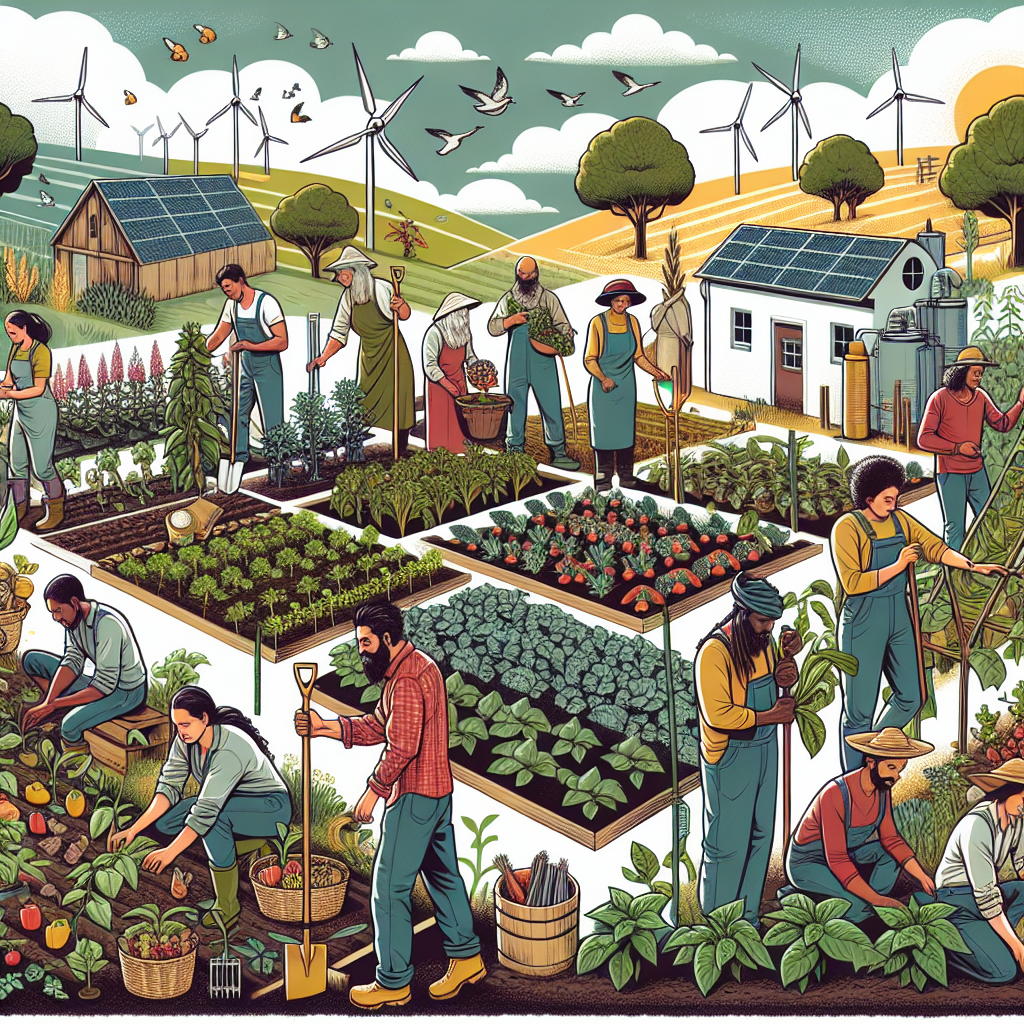
Building Resilience in the Face of Sustainable Farming and Permaculture Practices
Introduction
In an era where environmental challenges and food security concerns are mounting, sustainable farming and permaculture practices have emerged as vital components in addressing these issues. These practices not only aim to produce food in a manner that is environmentally sound but also strive to enhance the resilience of agricultural systems. By incorporating principles of ecology, sustainability, and community engagement, sustainable farming and permaculture offer a holistic approach to agriculture. This article delves into how these practices contribute to building resilience in agricultural systems and communities, exploring their principles, benefits, and challenges.
Understanding Sustainable Farming
Sustainable farming is an agricultural practice that seeks to meet current food needs without compromising the ability of future generations to meet theirs. It incorporates methods that are environmentally sound, economically viable, and socially responsible.
Principles of Sustainable Farming
1. **Environmental Protection**: Emphasizes the conservation of natural resources, including soil, water, and biodiversity.
2. **Economic Viability**: Ensures that farming practices are financially sustainable for farmers and communities.
3. **Social Responsibility**: Focuses on fair labor practices and community engagement.
4. **Animal Welfare**: Prioritizes the humane treatment of livestock.
Benefits of Sustainable Farming
– **Environmental Benefits**: Reduces pollution, conserves water, and enhances soil health.
– **Economic Benefits**: Lowers production costs and increases profitability through efficient resource use.
– **Social Benefits**: Supports rural communities and promotes food security.
Challenges in Sustainable Farming
– **Initial Costs**: Transitioning to sustainable practices may require significant investment.
– **Knowledge and Skills**: Requires farmers to acquire new skills and knowledge.
– **Market Access**: Sustainable products may face challenges in reaching broader markets.
Exploring Permaculture
Permaculture is a design philosophy that seeks to create agricultural systems that mimic the natural ecosystems. It focuses on creating self-sustaining agricultural environments that are both productive and resilient.
Core Principles of Permaculture
1. **Observe and Interact**: Understanding the environment and working with natural systems.
2. **Catch and Store Energy**: Utilizing resources efficiently to create energy reserves.
3. **Obtain a Yield**: Ensuring that systems provide useful outputs.
4. **Apply Self-regulation and Accept Feedback**: Adapting practices based on observations and outcomes.
5. **Use and Value Renewable Resources**: Prioritizing renewable resources over non-renewable ones.
6. **Produce No Waste**: Designing systems that minimize waste.
7. **Design from Patterns to Details**: Using natural patterns as a guide for design.
8. **Integrate Rather than Segregate**: Encouraging symbiotic relationships between components.
9. **Use Small and Slow Solutions**: Focusing on small-scale, sustainable interventions.
10. **Use and Value Diversity**: Promoting biodiversity and resilience.
11. **Use Edges and Value the Marginal**: Leveraging the unique opportunities at the boundaries of systems.
12. **Creatively Use and Respond to Change**: Embracing change as an opportunity for innovation.
Benefits of Permaculture
– **Resilience**: Builds systems that are adaptable to environmental changes.
– **Biodiversity**: Encourages a diverse range of plants and animals.
– **Resource Efficiency**: Maximizes the use of available resources.
– **Community Engagement**: Fosters community involvement and cooperation.
Challenges in Permaculture
– **Complexity**: Designing and maintaining permaculture systems can be complex.
– **Time-Intensive**: Requires significant time investment for planning and implementation.
– **Cultural Acceptance**: May face resistance due to traditional agricultural practices.
Building Resilience through Sustainable Farming and Permaculture
Sustainable farming and permaculture practices are instrumental in enhancing the resilience of agricultural systems and communities. Resilience in this context refers to the capacity of systems to withstand and recover from environmental, economic, and social challenges.
Enhancing Environmental Resilience
Sustainable farming and permaculture practices contribute to environmental resilience by:
– **Soil Health**: Improving soil structure and fertility through practices such as crop rotation, cover cropping, and composting.
– **Water Management**: Implementing efficient irrigation systems and rainwater harvesting to conserve water resources.
– **Biodiversity Conservation**: Encouraging diverse ecosystems that support a wide range of species.
Promoting Economic Resilience
These practices support economic resilience by:
– **Reducing Input Costs**: Minimizing the need for synthetic fertilizers and pesticides.
– **Increasing Productivity**: Enhancing crop yields through improved soil and water management.
– **Diversifying Income Streams**: Integrating multiple crops and livestock to reduce economic risk.
Fostering Social Resilience
Sustainable farming and permaculture also strengthen social resilience by:
– **Empowering Communities**: Engaging local communities in decision-making and implementation.
– **Enhancing Food Security**: Providing reliable access to nutritious food.
– **Building Knowledge and Skills**: Educating farmers and communities about sustainable practices.
Case Studies in Resilience Building
Examining real-world examples can provide valuable insights into how sustainable farming and permaculture practices contribute to resilience.
Case Study 1: The Loess Plateau, China
The Loess Plateau in China is an example of large-scale ecological restoration through sustainable farming practices. By implementing terracing, reforestation, and soil conservation techniques, the region transformed from a degraded landscape into a productive agricultural area. This project enhanced environmental resilience by restoring ecosystems and improving water retention.
Case Study 2: The Permaculture Research Institute, Australia
The Permaculture Research Institute in Australia showcases the potential of permaculture to build resilience. Through the integration of diverse crops, water management systems, and renewable energy, the institute has created a self-sustaining agricultural environment. This approach has improved economic resilience by reducing reliance on external inputs and fostering community engagement.
Conclusion
Sustainable farming and permaculture practices offer promising pathways to building resilience in agricultural systems and communities. By prioritizing environmental protection, economic viability, and social responsibility, these practices address the complex challenges facing modern agriculture. While there are challenges to their implementation, the benefits far outweigh the drawbacks. As the world continues to grapple with environmental and food security issues, sustainable farming and permaculture provide valuable tools for creating a resilient and sustainable future. Embracing these practices is not only a necessity but also an opportunity to innovate and transform agricultural systems for the better.
