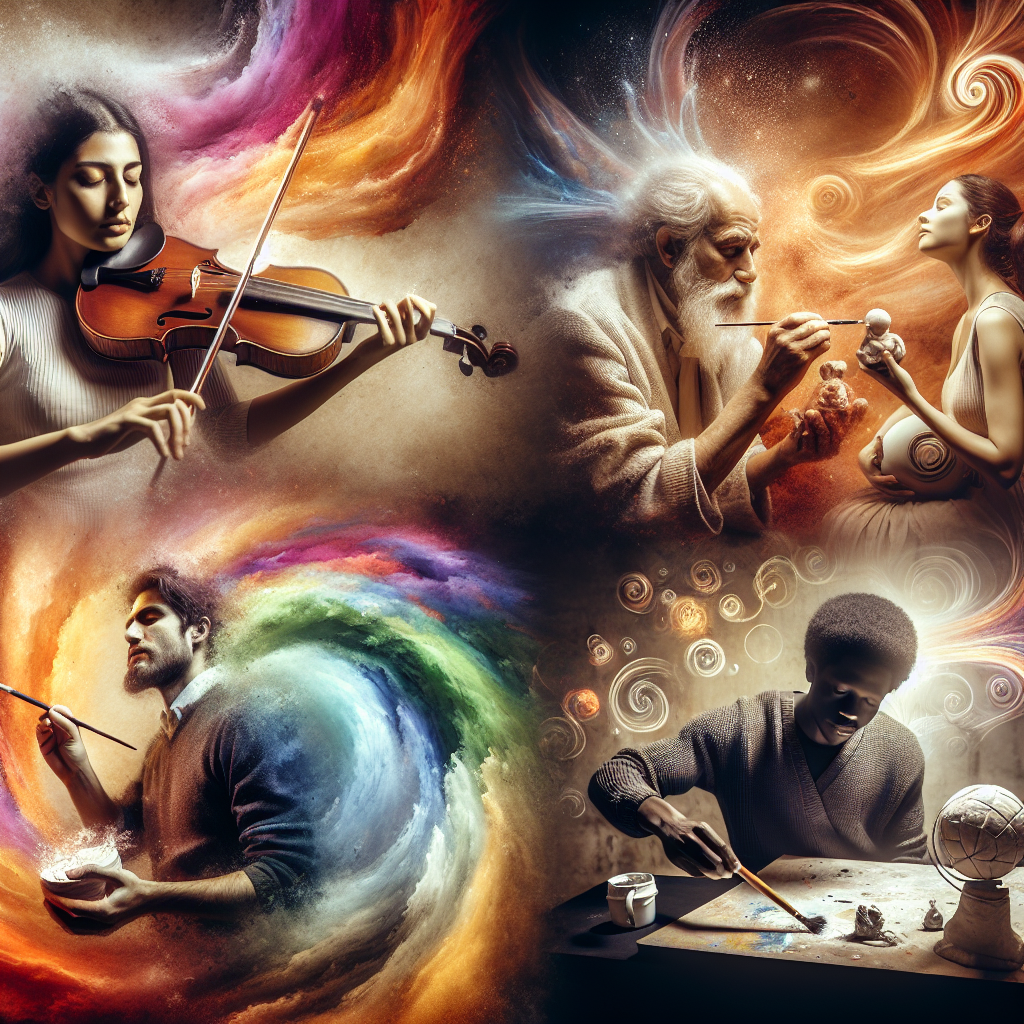
The Healing Power of Creative Expression
Unlocking the Therapeutic Benefits of Artistic Endeavors
Introduction to Creative Healing
In a world increasingly characterized by relentless hustle and pervasive stress, finding solace in the act of creation can be a much-needed refuge for the soul. Creative expression, spanning across various artistic forms such as painting, writing, music, and dance, has long been hailed not only as a medium for personal fulfillment but also as a powerful catalyst for healing and wellbeing. The intersection of creativity and psychology has given rise to an understanding of art as therapy, an avenue through which individuals can explore, understand, and mend the complexities of their inner selves.
The Power of Art Therapy
First, it is important to define what art therapy entails. It is a form of psychotherapy that uses the creative process of making art to improve a person’s physical, mental, and emotional well-being. The power of art therapy lies in its ability to unlock emotional expression through non-verbal communication, which can sometimes articulate feelings and thoughts that words cannot capture.
The practice of art therapy is grounded in the belief that the process of creating art is intrinsically healing and life-enhancing. It offers people a chance to:
– Express themselves in a tangible way
– Explore emotions and resolve conflicts
– Develop self-awareness and self-esteem
– Manage behavior and addictions
– Reduce stress and improve cognitive functions
– Improve interpersonal skills
By engaging in art therapy, individuals of all ages can find a constructive outlet for the emotions and experiences that may be otherwise difficult to articulate.
The Role of Music in Emotional Catharsis
Music, with its universal language and profound emotional reach, is another powerful tool within the realm of creative therapeutic techniques. Music therapy involves the use of music to address the physical, emotional, cognitive, and social needs of individuals. It can take various forms, including listening to music, creating music, singing, and moving to music.
Engagement with music therapy has been shown to yield a plethora of benefits, such as:
– Alleviation of pain and discomfort
– Decrease in feelings of depression and anxiety
– Strengthening of cognitive abilities
– Improvement in motor and coordination skills
– Enhancement of communication and social interaction
For those who may find it challenging to express themselves through verbal communication, music provides a potent means to bridge that gap, allowing for profound emotional release and connectivity with others.
Writing as a Tool for Mental Clarity
The written word is another canvas on which many find solace and healing. Journaling and other forms of writing can be powerful therapeutic tools that assist individuals in navigating through their mental labyrinth. Writing has the potential to:
– Clarify one’s thoughts and feelings
– Prioritize problems, fears, and concerns
– Track any symptoms day-to-day so that they can recognize triggers and learn ways to better control them
– Provide an opportunity for positive self-talk and identifying negative thoughts and behaviors
Writing, both in structured therapeutic settings and as a personal routine, can help individuals reflect, meditate, and sift through the contents of their minds, laying the groundwork for recovery and personal growth.
The Comfort of Dance and Movement
Dance and movement therapy, often referred to as DMT, is a therapeutic form of creative expression that uses bodily movement as the core component of the healing process. It rests on the premise that body and mind are interconnected. Through dance, individuals can achieve emotional, cognitive, physical, and social integration. Benefits include:
– Development of body awareness
– Expression of emotions
– Improvement of self-esteem and body image
– Enhancement of social skills
– Reduction of anxiety and stress
– Cultivation of emotional resilience
As individuals move their bodies, they are also moving toward a deeper understanding of their own identities and experiences, paving the way for emotional healing and transformation.
The Transformative Power of Visual Arts
Visual arts therapy, encompassing activities like drawing, painting, sculpture, and photography, provides individuals with a unique means to convey their inner experiences. Immersion in visual arts can assist in:
– Fostering self-expression and communication
– Enhancing sensory, perceptual and psychomotor abilities
– Cathartic release of tension and buried emotions
– Resolving inner conflicts and traumas
– Building self-esteem and a sense of accomplishment
In exploring the visual arts, people often discover metaphors and symbols that represent aspects of their experiences, facilitating insight, understanding, and sometimes even resolution.
Integration of Creativity into Daily Life for Enhanced Wellbeing
Incorporating creative expression into one’s daily routine can be beneficial to anyone, regardless of whether they identify as an ‘artist’. Here are some simple ways to integrate creative practice into everyday life:
– Set aside time each day to engage in a creative activity that brings joy, whether it’s doodling, writing a poem, or strumming a guitar.
– Keep a journal handy to jot down thoughts, sketches, or feelings as they arise—it can be a reflective tool and an emotional outlet.
– Attend workshops or classes to learn a new form of creative expression, which can also offer the chance to connect with a community of like-minded individuals.
– Interact with the art around you by visiting galleries, attending concerts, or watching performances, enabling an appreciation and connection with the broader universe of creative work.
Conclusion: Embracing Creative Healing
The healing power of creative expression is boundless. It offers a sanctuary where one can explore the deepest caverns of the soul, confront and comfort one’s inner turmoil, and emerge more intact, more understanding, and more at peace with the complexities of the human experience. Creative expression can provide solace for the grief-stricken, a voice for the unheard, and a canvas for the visionary.
In a fast-paced world where efficiency often overshadows emotion, it is vital to remember the regenerative potential of a simple brushstroke, the catharsis in a melody, the revelation in a stanza, or the freedom in a dance. Taking the time to engage in creative endeavors is not just an indulgence; it is a profound undertaking for self-healing, growth, and, ultimately, a more harmonious life.
Whether through formal therapeutic settings or personal engagement with art, the path to wellbeing can be beautifully illuminated by the rays of creativity. And on this path, many may find that the act of creation is not merely about producing an external piece of art; it is about reconstructing the soul and reimagining the narrative of one’s life in more vibrant and exquisite hues.
