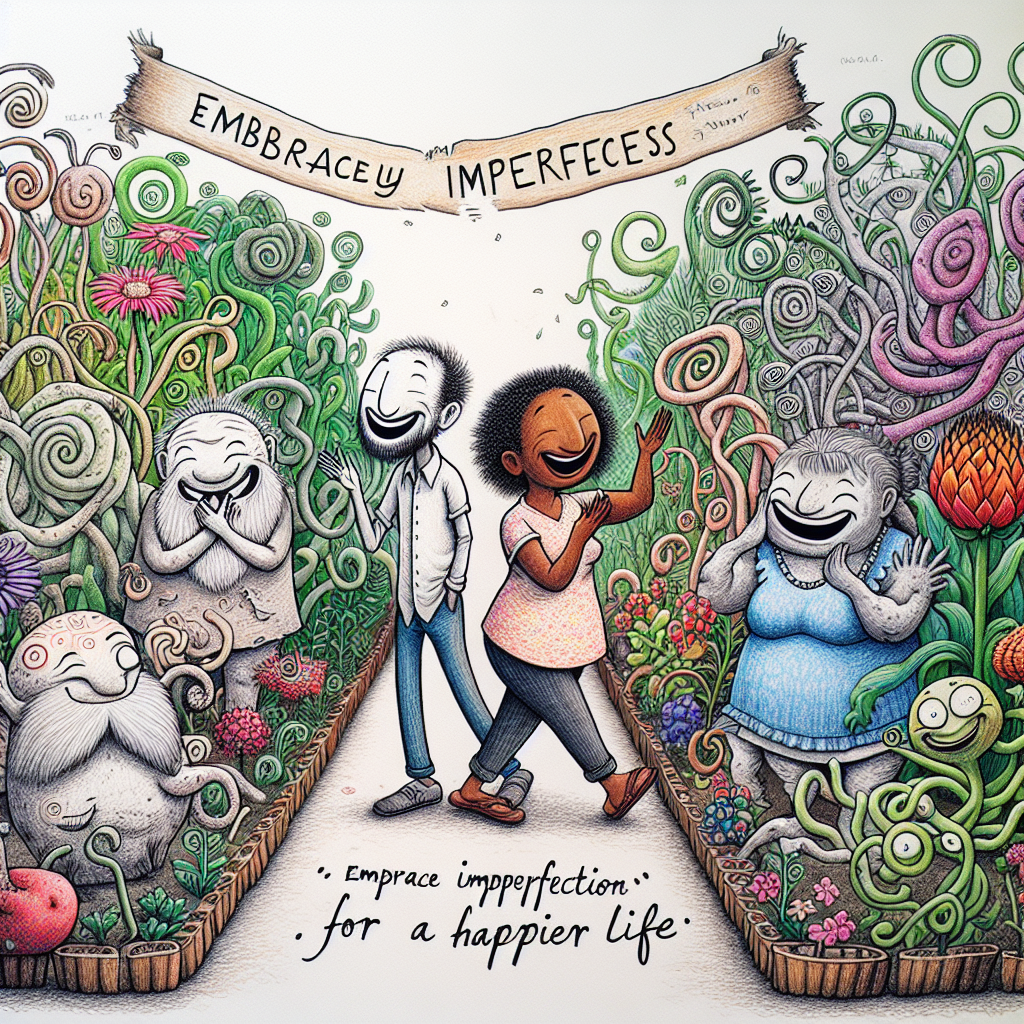
## Embracing Imperfection for a Happier Life
In an age of glossy magazine covers, filtered social media personas, and the relentless pursuit of perfection, the quest for a flawless existence can feel both overwhelming and unattainable. Many of us strive for perfection in various aspects of our lives, from our careers and academics to our appearances and relationships. But what if the true key to a happier, more fulfilling life was not in eradicating imperfections but rather in embracing them?
In this exploration of why imperfection is not just acceptable but beneficial, we will navigate through the layers of personal growth and well-being that are woven into accepting life’s inherent imperfections.
### The Illusion of Perfection
One of the main obstacles to happiness is the belief in the illusion of perfection. This belief sets an unachievable standard that can lead to a persistent sense of failure and inadequacy. From an early age, we are bombarded with messages that suggest success is synonymous with flawlessness. Whether it is pressure to achieve perfect grades, to maintain an ideal body image, or to cultivate a faultless professional reputation, the quest for perfection can become a never-ending and exhausting race.
– **Media Influence**: The portrayal of perfect lives in media can skew our perception of reality, making us believe that anything less than perfection is not good enough.
– **Personal Expectations**: Often, we impose strict expectations on ourselves, which can lead to disappointment when we inevitably fall short.
– **Social Comparison**: The human tendency to compare ourselves to others can exacerbate feelings of inadequacy, particularly in the age of social media where highlight reels are the norm.
### The Beauty of Imperfection
Ironically, the very imperfections we often try to hide or fix are what make us unique and human. Embracing imperfection does not mean settling for mediocrity; it means recognizing and valuing the beauty in the natural, unpolished state of things, including ourselves.
– **Vulnerability**: Allowing ourselves to be vulnerable, with all our quirks and errors, can be an incredibly liberating experience, fostering deeper connections with others.
– **Resilience**: By accepting imperfection, we become more resilient, learning from our mistakes rather than being defeated by them.
– **Authenticity**: Imperfection can lead to authenticity, as we become more genuine and true to ourselves when we are not preoccupied with maintaining a facade of perfection.
### Perfectionism and Mental Health
The pursuit of perfection can have significant effects on mental health. Chronic perfectionism has been linked to a variety of psychological issues, including anxiety, depression, and low self-esteem. When we are constantly scrutinizing ourselves for every tiny fault, we are setting the stage for a life of stress and dissatisfaction.
– **Anxiety**: Striving for perfection can lead to heightened anxiety as the fear of making mistakes or not meeting standards looms large.
– **Depression**: Feelings of failure and worthlessness can arise when we consistently fall short of our perfectionist goals.
– **Burnout**: Continuously pushing oneself to achieve perfection can result in burnout, characterized by emotional, physical, and mental exhaustion.
### Learning from Failure
Failure is often seen as something to be avoided at all costs, but in reality, it can be one of our greatest teachers. When we fail, we are afforded an invaluable opportunity to learn, grow, and adapt.
– **Growth Mindset**: Cultivating a growth mindset involves seeing failure not as a reflection of our worth but as a natural step in the learning process.
– **Innovation**: Many of the world’s greatest innovations have been born from failure. By allowing ourselves to fail, we open the door to creative and out-of-the-box thinking.
– **Resilience**: Embracing failure builds resilience as we learn to recover and continue forward, often with a better understanding and approach.
### Embracing Imperfection in Relationships
Perfectionism can be particularly toxic in relationships. When we expect ourselves or our partners to be without fault, we are setting the scene for disappointment and conflict. Embracing imperfection within relationships means accepting that both we and our partners are works in progress.
– **Acceptance**: Accepting ourselves and our partners, flaws and all, can enhance the depth and authenticity of our relationships.
– **Empathy**: When we acknowledge our own imperfections, we tend to be more empathetic towards others, promoting understanding and compassion in our relationships.
– **Growth**: Imperfect relationships, like individuals, have the potential for growth. Working through imperfections together can strengthen the bond and build trust.
### The Role of Mindfulness
Mindfulness is the practice of being present and fully engaged in the current moment without judgment. Integrating mindfulness into our daily lives can help us break free from the perfectionist mindset and accept life’s imperfections.
– **Awareness**: Mindfulness fosters heightened awareness, allowing us to recognize and appreciate the imperfect beauty of the present.
– **Self-compassion**: Through mindfulness, we can cultivate self-compassion, treating ourselves with the same kindness we would offer a friend in distress.
– **Reduction of Stress**: By focusing on the present rather than ruminating on past mistakes or fretting about future failures, mindfulness can significantly reduce stress levels.
### Redefining Success
To live a happier life, it is important to redefine what success means to us. Moving away from perfection-based criteria to more attainable and healthy measures of success can transform our outlook and well-being.
– **Personal Fulfillment**: Measuring success by personal fulfillment rather than external achievements can lead to greater happiness and satisfaction.
– **Progress, Not Perfection**: Shifting the focus from a perfect end result to the progress made along the way acknowledges effort and improvement.
– **Balance**: Prioritizing a balanced life that includes room for leisure, relationships, and self-care is essential in redefining success.
### Imperfection in Creative Expression
In creative endeavors, imperfection can be a source of originality and charm. Many artists and creatives have embraced the imperfect, recognizing that it can add character and depth to their work.
– **Wabi-Sabi**: The Japanese concept of wabi-sabi celebrates the beauty of imperfection, recognizing it as an integral part of the artistic process.
– **Authenticity**: Art that incorporates imperfection can be more relatable and authentic, resonating strongly with audiences.
– **Freedom**: Letting go of the need for perfection in creative work can liberate artists from self-imposed constraints, leading to more inspired and spontaneous creations.
### Conclusion
Embracing imperfection is a profoundly transformative journey that can lead to a happier, more contented life. By releasing the unattainable chains of perfectionism, we open ourselves up to growth, creativity, and well-being. We learn to accept and love ourselves just as we are, which in turn allows us to extend that acceptance to others. Life is inherently imperfect, and it is through those imperfections that we discover our resilience, depth, and humanity. Choosing to live authentically, with all our beautiful imperfections, is not only an act of courage but one of liberation, paving the way for a more fulfilling existence.
